


How to Design a Reusable Exhibition Stand That Converts Visitors into Leads
- Mar 24
- 5 min read
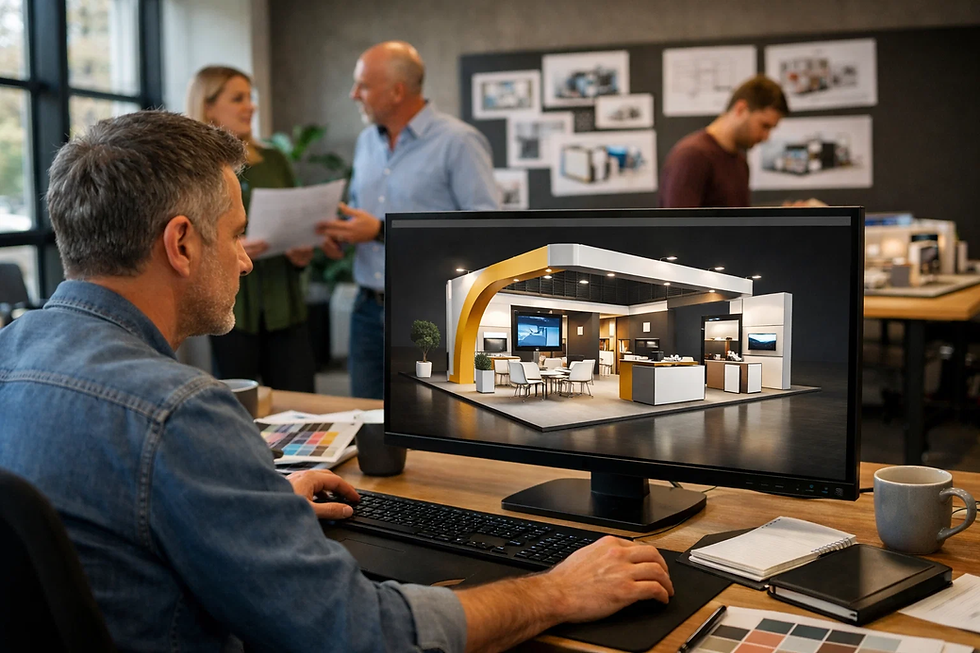
Ever walked past an exhibition stand and thought, "Wow, I need to check that out!" versus one that made you yawn and keep walking? Yeah, that's the power of smart stand design.
Here's the thing—exhibitions aren't cheap. Between travel costs, accommodation, staff time, and your stand itself, you're looking at serious investment. So why would you create a stand that only works once? That's like buying a smartphone and throwing it away after one call. Makes no sense, right?
That's where modular reusable exhibition stands UK businesses are raving about come into play. These clever setups let you rock multiple events without breaking the bank every single time. But here's the real question: How do you design one that doesn't just look pretty but actually turns those curious visitors into paying customers?
Let me walk you through this. Grab your coffee, and let's dive in.
Why Reusable Exhibition Stands Are Taking Over the UK Market
First off, let's talk about why everyone's switching to reusable stands. The exhibition game has changed big time.
Here's what's driving this trend:
Budget-friendly approach – One investment, multiple events. Your accountant will literally thank you.
Eco-conscious branding – Sustainability isn't just a buzzword anymore. Visitors actually care about this stuff.
Ultimate flexibility – Reconfigure your stand for different spaces and events. It's like having a transformer in your marketing toolkit.
Quick setup, quick teardown – Less time fumbling with complicated setups means more time connecting with potential leads.
Consistent brand presence – Same quality look across different exhibitions builds recognition and trust.
The UK market is especially hot on this trend. Companies like Wow Space are leading the charge, creating exhibition stands that work as hard as you do.
Understanding What Actually Converts Visitors into Leads
Before we get into the nitty-gritty design, let's be real about something. A fancy stand means nothing if it doesn't bring you leads. I've seen gorgeous stands that looked like art galleries but converted zero visitors. Ouch.
What actually makes someone stop, engage, and hand over their business card?
Clear value proposition – People need to "get" what you do in 3 seconds flat
Interactive elements – Touchscreens, product demos, or hands-on experiences beat static displays every time
Strategic positioning – Your stand layout should guide visitors naturally toward conversation points
Trained staff – The best stand design can't fix poor people skills (sorry, but it's true)
Follow-up systems – Having a way to capture and nurture leads on the spot is crucial
Now that we're on the same page about what matters, let's get into how to design your stand.
Step 1: Start With Your Core Message
Think about this—what's the ONE thing you want people to remember about your brand? Not ten things. ONE.
Your custom exhibition stands uk strategy should revolve around this single message. Everything from your graphics to your product placement should reinforce this core idea. When people are tired from walking around all day, simplicity wins. Always.
Write your core message down. Test it on someone who doesn't know your business. If they can't repeat it back to you accurately, simplify it more.
Step 2: Plan for Modularity From Day One
Here's where modular reusable exhibition stands UK companies really shine:
Interchangeable panels – Swap out graphics for different campaigns or audiences
Adjustable sizing – Expand or contract your stand based on the space you're allocated
Reconfigurable layouts – Change from an open booth to a semi-enclosed meeting space
Adaptable lighting – Update your lighting setup to match different venue conditions
Portable tech integration – Built-in mounts for screens and devices that travel with you
Wow Space actually specializes in this modular approach, and honestly, it's genius. You're not locked into one configuration forever. Your stand grows and adapts with your business needs.
Step 3: Create Clear Visitor Pathways
Picture this: Someone walks past your stand. They're interested but not sure where to enter or what to do. Awkward, right? They'll probably just keep walking.
Your stand design needs intentional pathways. Create an obvious entrance that's welcoming, not intimidating. Once inside, guide visitors through your space naturally. Maybe they see your hero product first, then move to an interactive demo, and finally end up at a comfortable spot where your team can have meaningful conversations.
Think about these pathway essentials:
Open frontage – Don't create walls that make your stand feel exclusive or closed off
Visual hierarchy – Use height variations and lighting to direct attention
Comfortable flow – Avoid bottlenecks where people get stuck or feel crowded
Clear exit points – Don't trap people. That's just weird and uncomfortable.
Step 4: Invest in Quality Interactive Elements
Static displays are basically invisible at modern exhibitions. Everyone's competing for attention, and you need something that makes people stop scrolling on their phones and actually engage with you.
Interactive elements don't have to mean expensive VR setups (though those are cool). Sometimes simple works best. A touchscreen showing your product customization options, a live demonstration of your service, or even a quick game that relates to your industry can work wonders.
The key is making sure your interactive elements tie directly to your lead generation goals. Every interaction should move someone closer to becoming a customer.
Step 5: Design for Brand Consistency
Your brand identity shouldn't be negotiable. Ever.
When working with custom exhibition stands UK designers, make sure your brand guidelines are crystal clear:
Exact color codes – Not "kinda blue" but your specific Pantone or hex codes
Approved fonts – Typography matters more than people think
Logo placement rules – Size, spacing, and positioning standards
Photography style – The images you use tell a story about your brand
Messaging tone – Formal, casual, technical? Stay consistent.
Wow Space gets this right by building stands that become true brand extensions, not generic booths with your logo slapped on.
Step 6: Build in Lead Capture Systems
This is where many companies drop the ball. You've attracted visitors, engaged them, interested them, and then... nothing. No system to capture their information properly.
Smart lead capture includes:
Digital forms – Tablets or kiosks where visitors can enter their details quickly
QR codes – Link to downloadable resources that require contact information
Badge scanning – Quick and professional way to capture attendee data
Interactive competitions – People love winning stuff, and you collect leads simultaneously
Booking systems – Let people schedule follow-up calls right there
Make it stupid-easy for people to give you their information. Every extra step you add loses you leads. That's just facts.
Step 7: Test, Measure, and Improve
Your first exhibition with a new stand won't be perfect. That's okay. The beauty of modular reusable exhibition stands uk businesses use is that you can keep improving between events.
After each show, gather your team and honestly assess what worked and what flopped. Which parts of your stand got the most attention? Where did conversations naturally happen? What questions kept coming up that your stand didn't address visually?
Then make adjustments. Maybe you need different graphics. Perhaps your interactive element needs repositioning. Could be your team needs better positioning within the space.
The Bottom Line
Designing a reusable exhibition stand that actually converts isn't rocket science, but it does require thoughtful planning. You're balancing aesthetics, functionality, brand consistency, and lead generation goals all at once.
The UK market is getting smarter about exhibition investments. Companies are realizing that quality, adaptable stands from specialists like Wow Space deliver better ROI than constantly creating disposable setups.
Remember this: Your stand is a tool, not decoration. Every design choice should serve the ultimate goal of turning visitors into leads. Keep that front and center, invest in quality modular systems, and you'll be set up for exhibition success for years to come. Now get out there and design something that makes competitors jealous and visitors become customers!


Comments